
When creating a website, one common question many beginners and business owners ask is single page vs multi page website – which one performs better? Both options are popular, but they work in different ways and serve different goals.
This guide explains the difference between single-page and multi-page websites in simple language. You will learn what each type is, why the choice matters, and which option suits small businesses and beginners in India. If you are planning a new website or redesigning an old one, this article will help you make the right decision.
What Is Single Page vs Multi Page Website?

Single-Page Website
A single-page website has all content on one long page. Users scroll to see different sections like About, Services, and Contact.
Example:
Portfolio websites, event landing pages, or startup introduction pages.
The term single page vs multi page website The term single page vs multi page website compares two different website structures.
Multi-Page Website
A multi-page website has separate pages for different topics. Each page has its own URL.
Example:
Business websites with Home, About Us, Services, Blog, and Contact pages.
Both structures have their own use cases and performance strengths.
Why Is It Important for Small Businesses ?
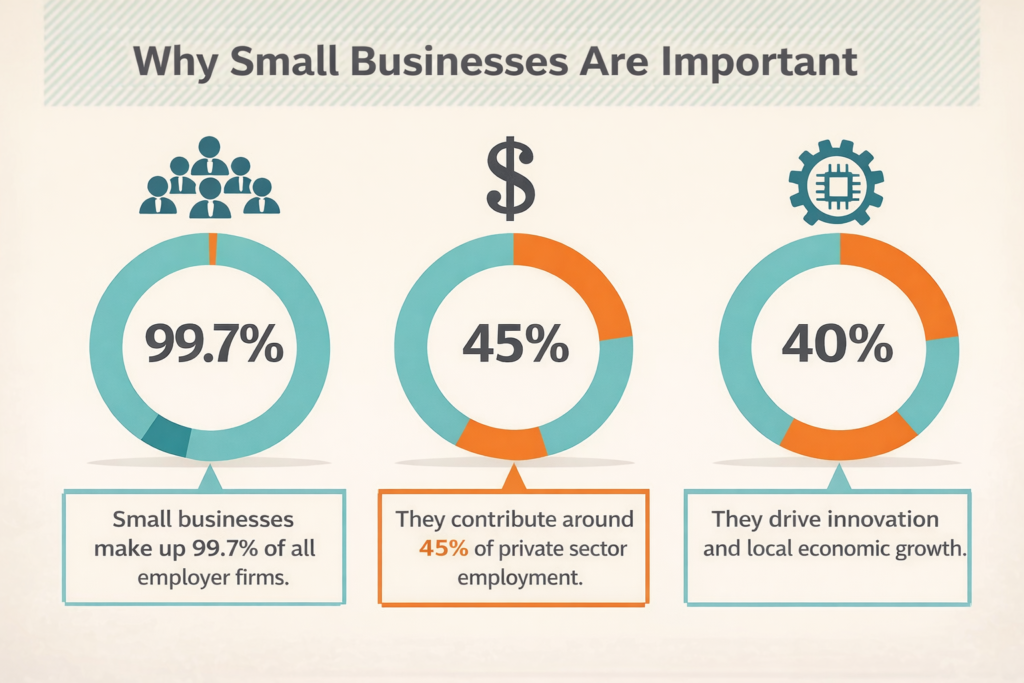
Choosing the right website structure affects performance, SEO, and user experience.
Practical Benefits
Better user navigation
Improved SEO performance
Clear content organization
Higher conversion potential
Indian Business Context
In India, small businesses often target local customers and rely on Google search. Understanding single page vs multi page website helps business owners choose a structure that fits their budget, content needs, and long-term growth plans.
Key Features, Types, and Options
Key Features of a Single-Page Website
All content on one page
Smooth scrolling navigation
Faster initial setup
Simple structure
Key Features of a Multi-Page Website
Separate pages for each topic
Better content depth
Easier SEO targeting
Scalable for future growth
When to Choose Each Option
Single-page: Portfolio, landing page, small campaigns
Multi-page: Business websites, blogs, service-based companies
Step-by-Step Guide: How Each Website Type Works
Step 1: Content Structure
Single-page: Content divided into sections
Multi-page: Content divided into individual pages
Step 2: Navigation Setup
Single-page: Menu scrolls to sections
Multi-page: Menu links to different URLs
Step 3: SEO Setup
Single-page: One main keyword focus
Multi-page: Different keywords for different pages
Step 4: Performance and Growth
Single-page: Limited content expansion
Multi-page: Easy to add new pages and blogs
This step-by-step comparison explains how single page vs multi page website works in real life.
Advantages and Disadvantages
Single-Page Website
Advantages
Simple and clean design
Faster development
Good for mobile users
Clear call-to-action
Disadvantages
Limited SEO opportunities
Hard to target multiple keywords
Not ideal for large content
Difficult to scale
Multi-Page Website
Advantages
Strong SEO potential
Better content organization
Scalable structure
More professional for businesses
Disadvantages
Takes more time to build
Needs ongoing maintenance
Slightly higher cost
Common Mistakes to Avoid
Beginners often make these mistakes while choosing single page vs multi page website:
Choosing single-page for content-heavy business
Ignoring SEO requirements
Poor navigation structure
Overloading single-page with too much content
Not planning future growth
Avoiding these mistakes helps improve performance and user experience.
SEO Perspective: Which One Performs Better on Google?
From an SEO point of view, multi-page websites usually perform better.
SEO Comparison
Single-page websites
Limited keyword targeting
Difficult content expansion
Good for branded searches
Multi-page websites
Better keyword coverage
Higher chances of ranking
Supports blogs and updates
Google prefers structured, informative websites. This is why, in most cases, single page vs multi page website performance favors multi-page websites for long-term SEO growth.
Frequently Asked Questions (FAQ)
1. Which is better for SEO, single-page or multi-page website?
Multi-page websites are generally better for SEO because they target multiple keywords.
2. Can a single-page website rank on Google?
Yes, but ranking is usually limited to a few keywords.
3. Is single-page website good for small businesses?
It is good for very small businesses or portfolios, but not for content-heavy sites.
4. Do multi-page websites load slower?
Not necessarily. With good optimization, multi-page websites can load fast.
5. Which option is better for beginners?
Beginners with growth plans should choose a multi-page website.